
Timeline
The timeline provides a visual interface for organising and controlling how elements appear, move, and interact in an animation. It has three main sections: the Header, which includes tools like the timer, zoom, and playback toggles; the Timeline Elements panel on the left, for managing screens, events, layers, and quick animations; and the Timeline Panel on the right, offering detailed controls for keyframes, spans, easing, and events.
Together, these sections let users sequence, edit, and fine-tune animations efficiently and intuitively, making complex interactions easier to create and manage.
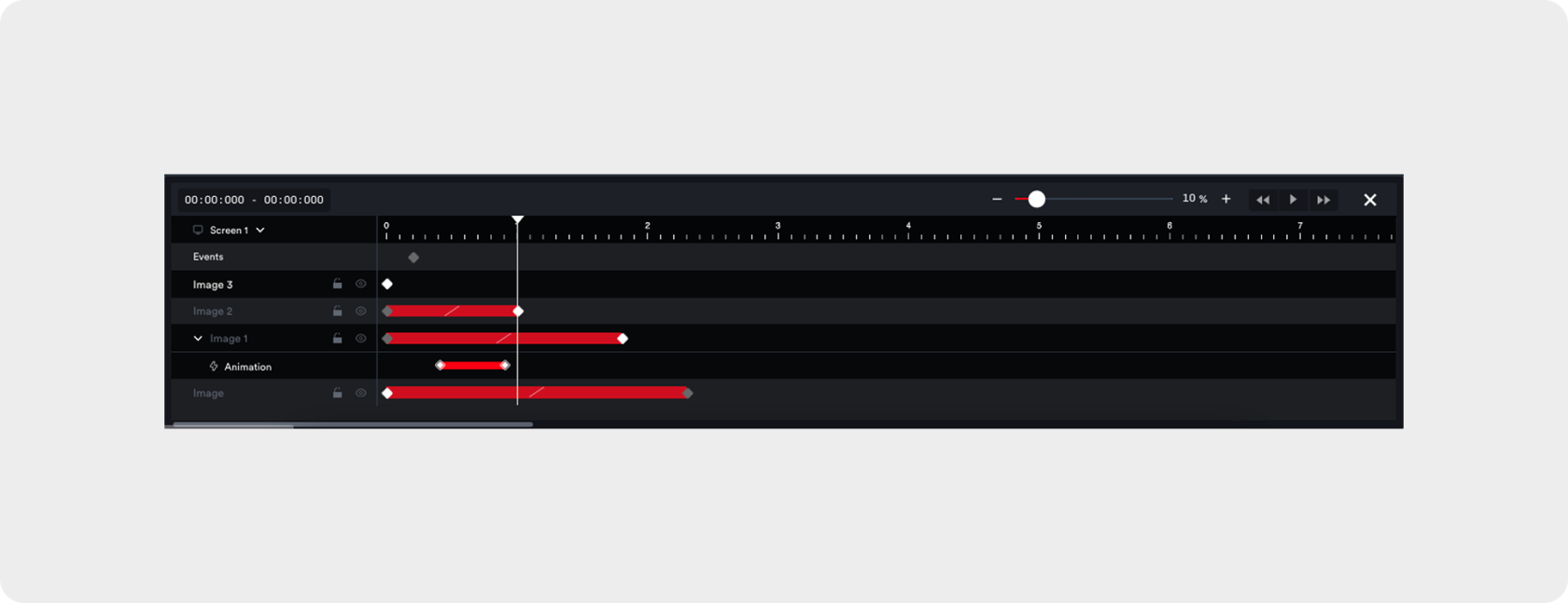
Header
The header provides essential controls for managing the timeline. It includes a Timer to display the current playback time and total duration, a Zoom slider for adjusting the timeline view and focusing on specific sections, and Toggle buttons to play, pause, or navigate forward/backward in small increments. Together, these tools allow users to monitor, control, and navigate the animation efficiently.
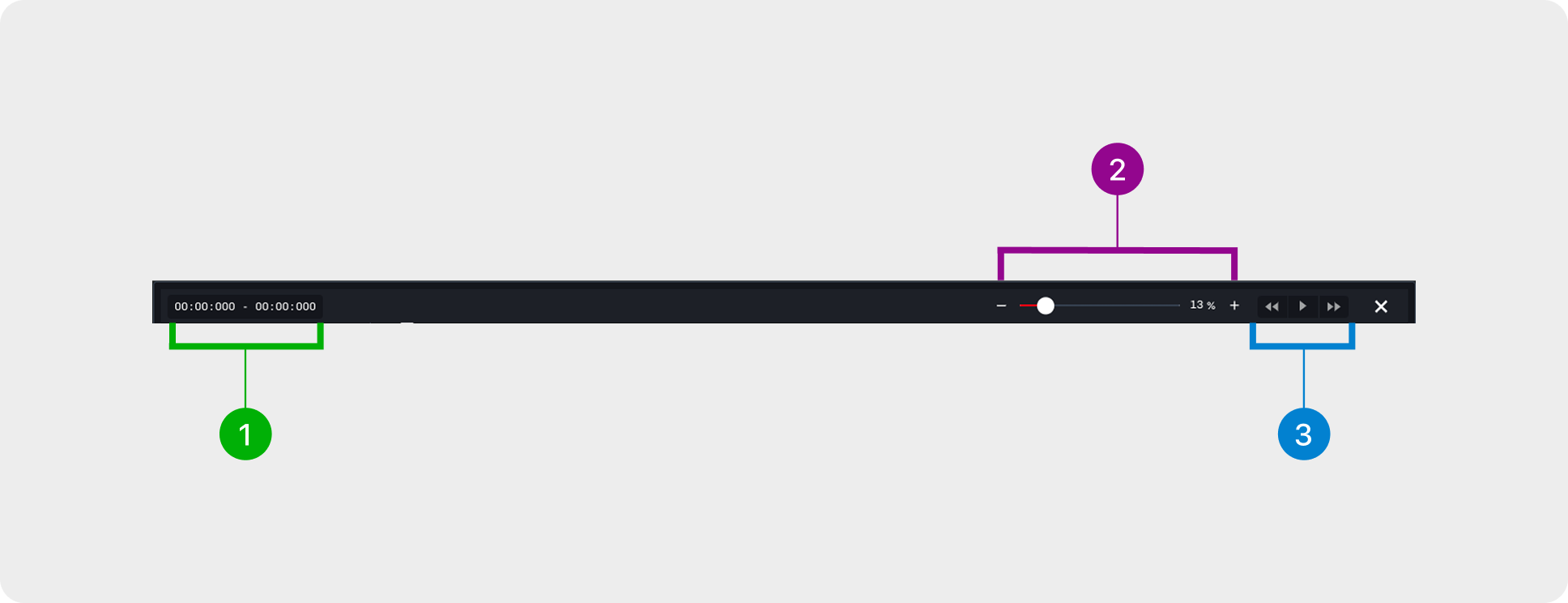
1. Timer
Displays the current playback time alongside the total duration of the animation, helping users track progress within the timeline.
2. Zoom
Adjusts the timeline view, allowing users to focus on specific sections or see the animation in full for better navigation.
3. Toggle
Allows users to play or pause the animation and jump 100 ms backward or forward, enabling precise navigation within the timeline.
Elements
Displays the structure of the animation, including screens, events, layers, and quick animations. It helps users organize, manage, and navigate different components of the timeline. Users can perform actions like renaming, configuring, or deleting elements, making it easier to keep the animation well-structured and accessible
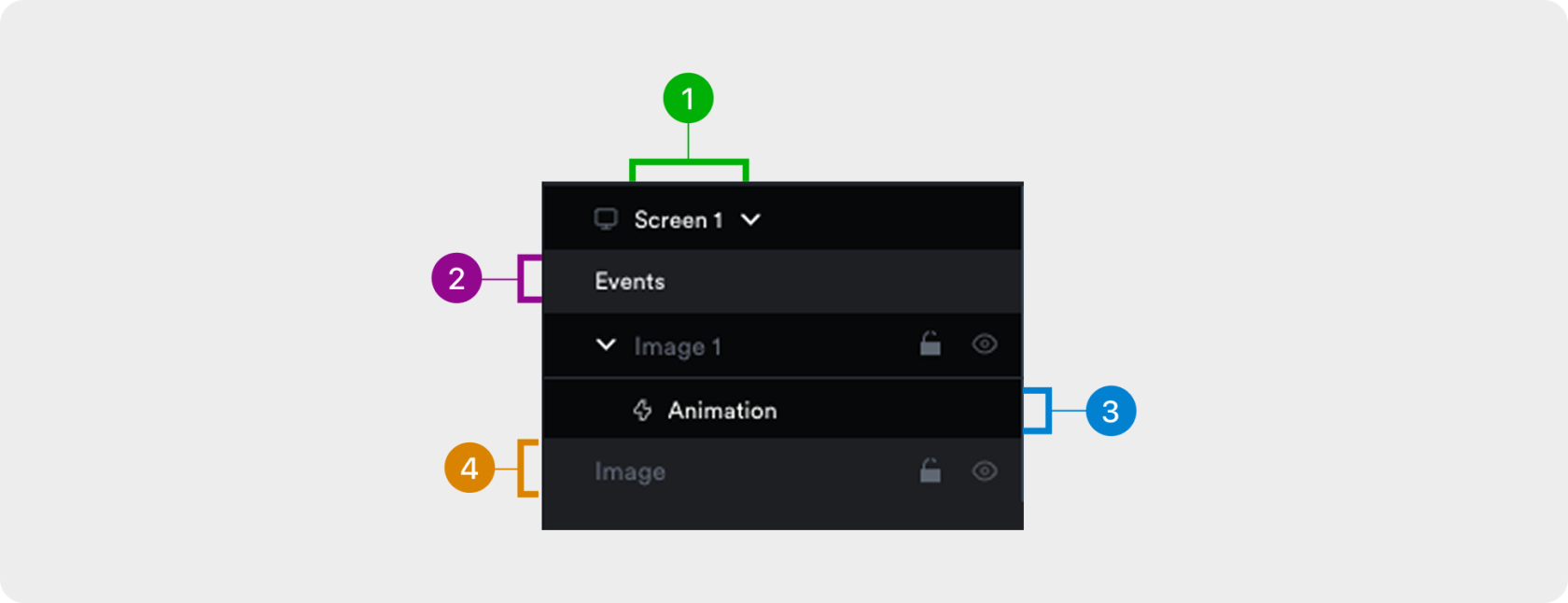
1. Screens
Lists all design screens, letting users switch between them to view and edit each screen’s timeline.
2. Events
Defines timeline triggers that control playback such as play, pause, restart, or jump or activate actions in other elements.
3. Animations
Shows quick animations applied to elements, displayed as sublayers under their respective layers for easy management.
4. Layers
Lists all elements on the screen, allowing users to arrange their order and manage visibility with the 
or lock them with the  to prevent edits.
Panel
Displays the timing and duration of elements within the animation. It helps users manage keyframes, spans, animations, easing, and events to fine-tune playback. This section focuses on controlling motion, transitions, and sequencing for smooth, precise animations.
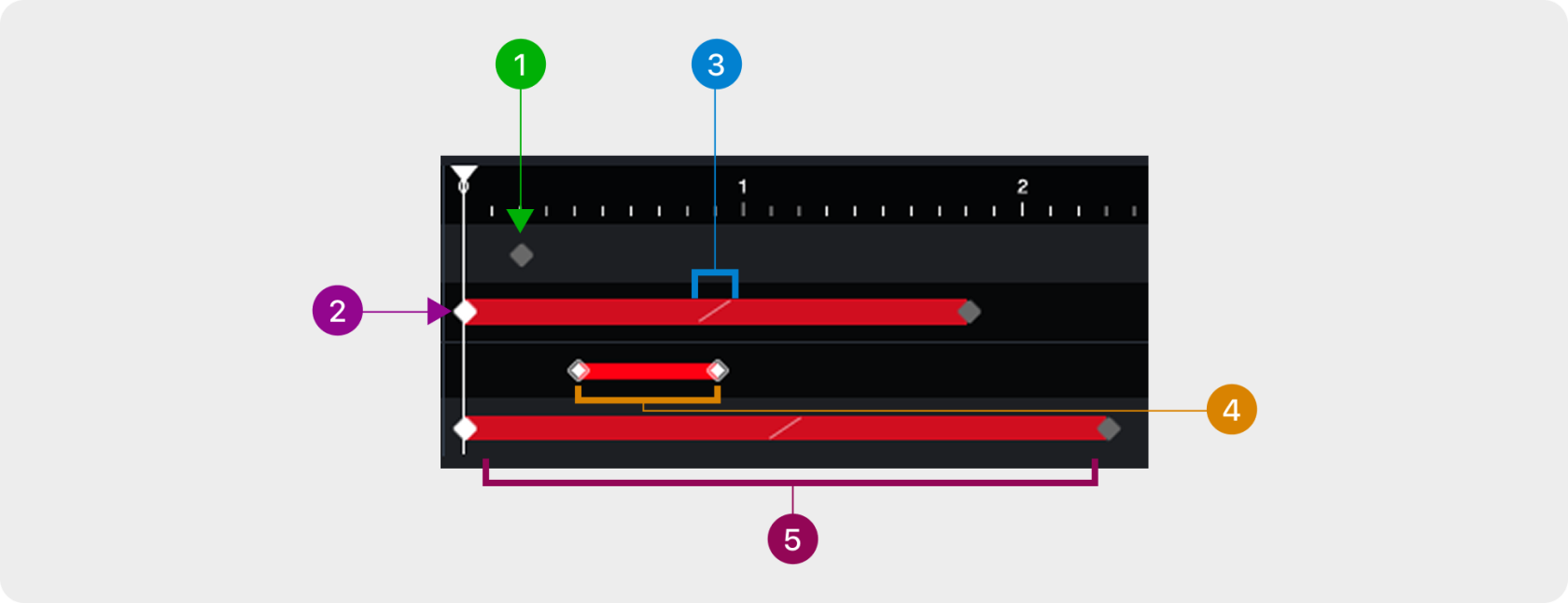
1. Events
Marks points in the timeline that trigger actions. Right-click an event to delete it, configure it, or set a label.
2. Keyframes
Marks the start and end values of properties to create motion or change. Right-click the timeline to add a keyframe, or right-click a keyframe to delete it.
3. Easing
Adjusts the acceleration and deceleration between keyframes for smoother transitions. Right click on the easing option icon to access the easing options.
4. Animations
Displays quick animations as sublayers under element layers, allowing users to adjust their position on the timeline.
5. Span
Shows the duration between keyframes, controlling how long a change takes.